01Real-world example
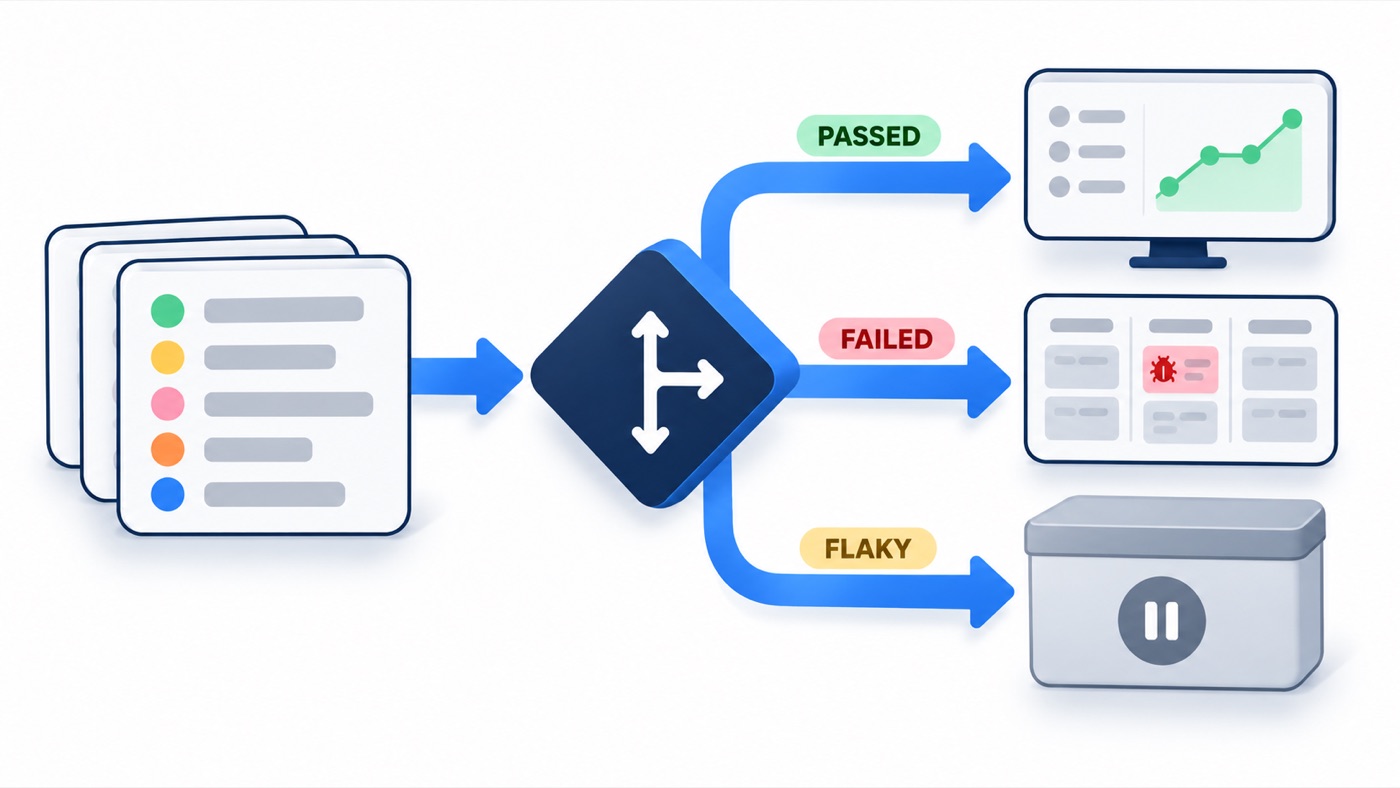
A router function reads the state and returns the name of the next node. Decisions live in that one function.
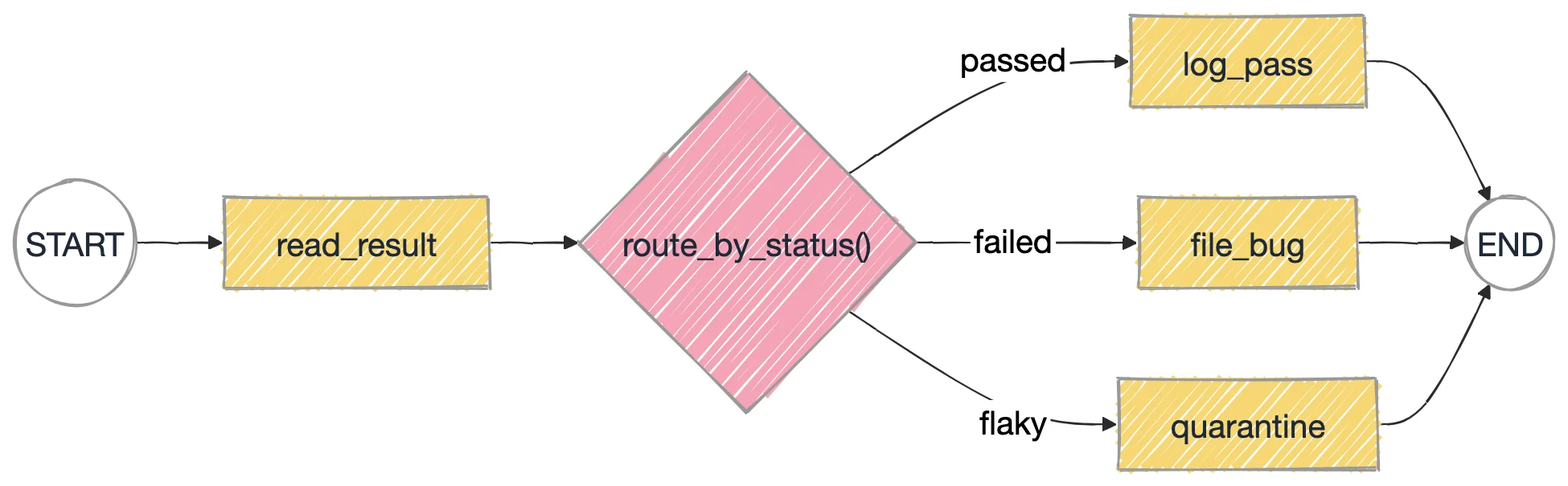
route_by_status() is a plain function: it reads state["status"] and returns the name of the next node.add_conditional_edges("read_result", route_by_status, [...]) lists every possible destination, which also lets LangGraph draw the fork.quarantine, because of the .get(..., "quarantine") default.cd chapter_18_LangGraph/src/chapters
python 003_Conditional_Edge.pycart_total passed -> logged as green
checkout_pay failed -> Jira bug filed for checkout_pay
login_redirect flaky -> login_redirect moved to quarantine, rerun nightlyWork in chapter_18_LangGraph/src/chapters. Change one thing, run it, and compare with the expected result.
Invoke the app with status="skipped". Where does it go, and why?
x moved to quarantine, rerun nightly: the router's default sends anything unknown to quarantine.Add a log_skip node, route "skipped" to it, and add it to the destinations list.
add_node plus add_edge(..., END), and the destinations list.log_skip; quarantine now only catches statuses you never planned for.Make the router return "nope". What happens at run time?
KeyError: 'nope'. The router can only return declared destinations.The exact file from the course repo, plus the output it printed when this page was written.
"""003 - A fork in the road: route a test result to the right next step.

add_conditional_edges(source, router, destinations)
The router is a normal function that reads state and returns the NAME of the
next node. That one function is where an "agent" makes decisions.
"""
from typing import Literal, TypedDict

from langgraph.graph import END, START, StateGraph


class State(TypedDict, total=False):
    test_name: str
    status: str          # passed | failed | flaky
    action: str


def read_result(state: State) -> dict:
    return {}            # in real life: parse a Playwright report here


def route_by_status(state: State) -> Literal["log_pass", "file_bug", "quarantine"]:
    return {"passed": "log_pass", "failed": "file_bug"}.get(state["status"], "quarantine")


def log_pass(state: State) -> dict:
    return {"action": "logged as green"}


def file_bug(state: State) -> dict:
    return {"action": f"Jira bug filed for {state['test_name']}"}


def quarantine(state: State) -> dict:
    return {"action": f"{state['test_name']} moved to quarantine, rerun nightly"}


builder = StateGraph(State)
builder.add_node("read_result", read_result)
builder.add_node("log_pass", log_pass)
builder.add_node("file_bug", file_bug)
builder.add_node("quarantine", quarantine)

builder.add_edge(START, "read_result")
builder.add_conditional_edges("read_result", route_by_status,
                              ["log_pass", "file_bug", "quarantine"])
for leaf in ("log_pass", "file_bug", "quarantine"):
    builder.add_edge(leaf, END)

app = builder.compile()

if __name__ == "__main__":
    for name, status in [("cart_total", "passed"),
                         ("checkout_pay", "failed"),
                         ("login_redirect", "flaky")]:
        out = app.invoke({"test_name": name, "status": status})
        print(f"{name:<15} {status:<7} -> {out['action']}")

print("\n" + app.get_graph().draw_mermaid())cart_total passed -> logged as green
checkout_pay failed -> Jira bug filed for checkout_pay
login_redirect flaky -> login_redirect moved to quarantine, rerun nightly