The Testing Academy · Masterclass · QA Engineering
Loop Engineering for QA.
Design QA systems that observe evidence, make one bounded change, verify independently, preserve the record, and stop for a human decision.
Before you begin
Bring a safe, disposable target.
The included project supplies the broken test, protected product fixture, immutable oracle, and deterministic maker. No AI API key or production access is required.
Open the setup lesson- Runtime
- Node.js 20 or newer, npm, and Git.
- Browser
- Chromium installed through Playwright.
- Working knowledge
- Read a locator failure, a web-first assertion, and a Git diff.
- Safety boundary
- Use only the synthetic fixture. Keep credentials and production systems outside the loop.
Part one · Foundations
Design the Control System
Separate a useful engineering loop from a long prompt, a retry, or an unconstrained agent. Define what the system may observe, change, prove, and escalate.
Loop Engineering in QA
The feedback model, the QA fit, and the authority boundary that keeps an agent from grading itself.
1.2Prompt, Context, Harness, Loop
Classify each layer by the engineering question it answers and the failure it can prevent.
1.3Goal and Observable Exit
Turn a vague request into a measurable result with explicit acceptance and escalation states.
1.4Evidence Before Action
Choose the smallest trustworthy evidence bundle: failure output, source, oracle, and scope.
1.5The Bounded Maker
Give the repair worker one narrow correction surface and no authority over acceptance.
1.6State and Stop Decisions
Record attempts outside the conversation and make iterate, stop, and escalate explicit.
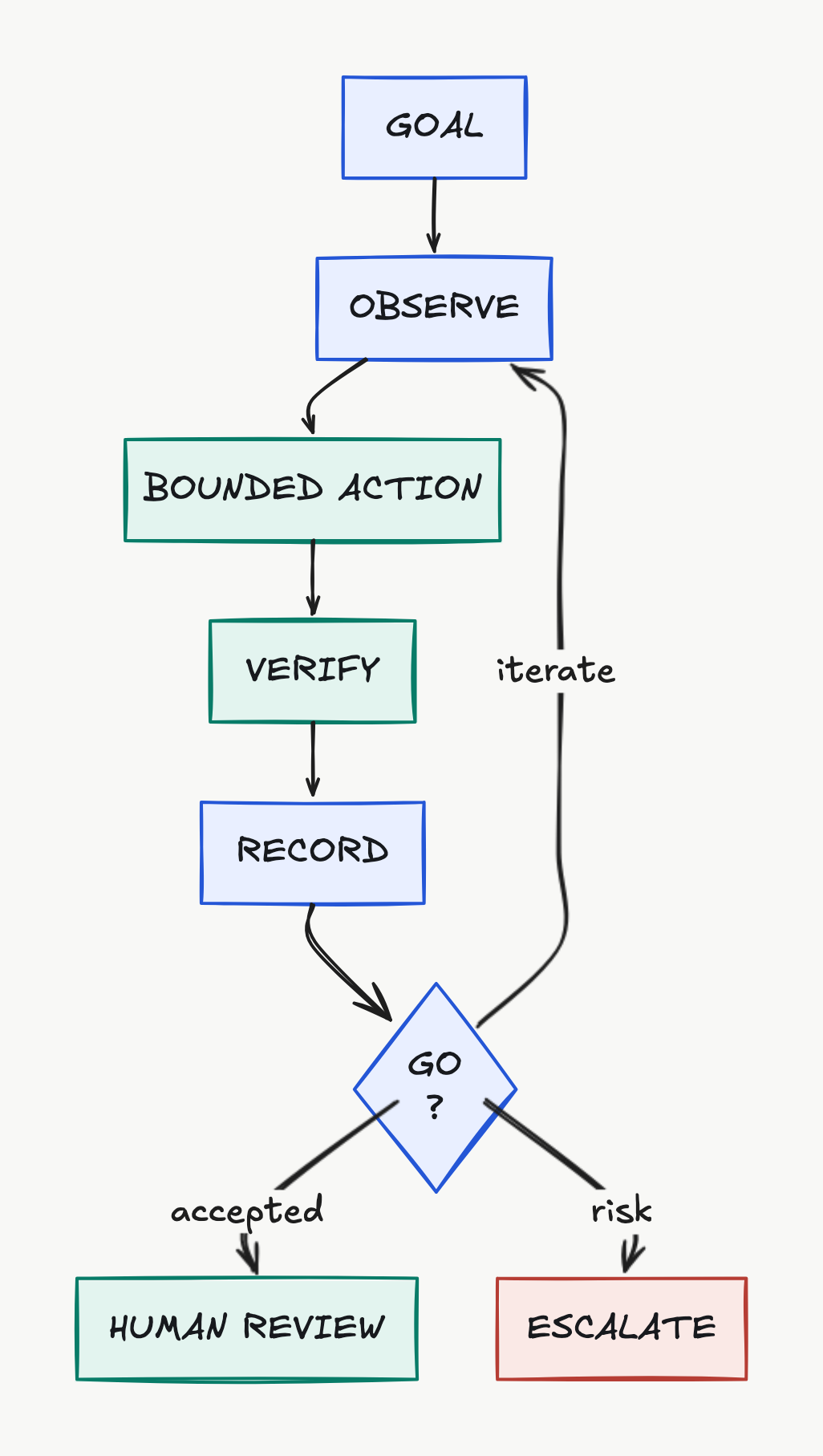
The control map
A loop is more than a retry.
A retry repeats an operation. A trustworthy loop uses verified evidence to choose the next bounded action, records what happened, and stops when authority must return to a human.
Part two · Trust
Build Trustworthy Verification
Protect product intent and test strength with a machine-readable contract, immutable acceptance checks, tamper-evident evidence, and an independent reviewer.
Machine-Readable Contract
Encode the goal, paths, checks, attempt ceiling, and final state in structured data.
2.2Mutable and Protected Paths
Separate the correction surface from product code, oracle, policy, prompts, and controller.
2.3Deterministic Verifier
Use fixed commands and exit codes instead of a model's narrative confidence.
2.4Immutable Oracle
Preserve intended behavior separately so a weak candidate cannot rewrite acceptance.
2.5Evidence Hashes and Manifests
Make every pass claim traceable to command output and a stable evidence identity.
2.6Independent Review and Human Gate
Challenge false-green results, then stop at a decision a person must own.
Verified in Chromium
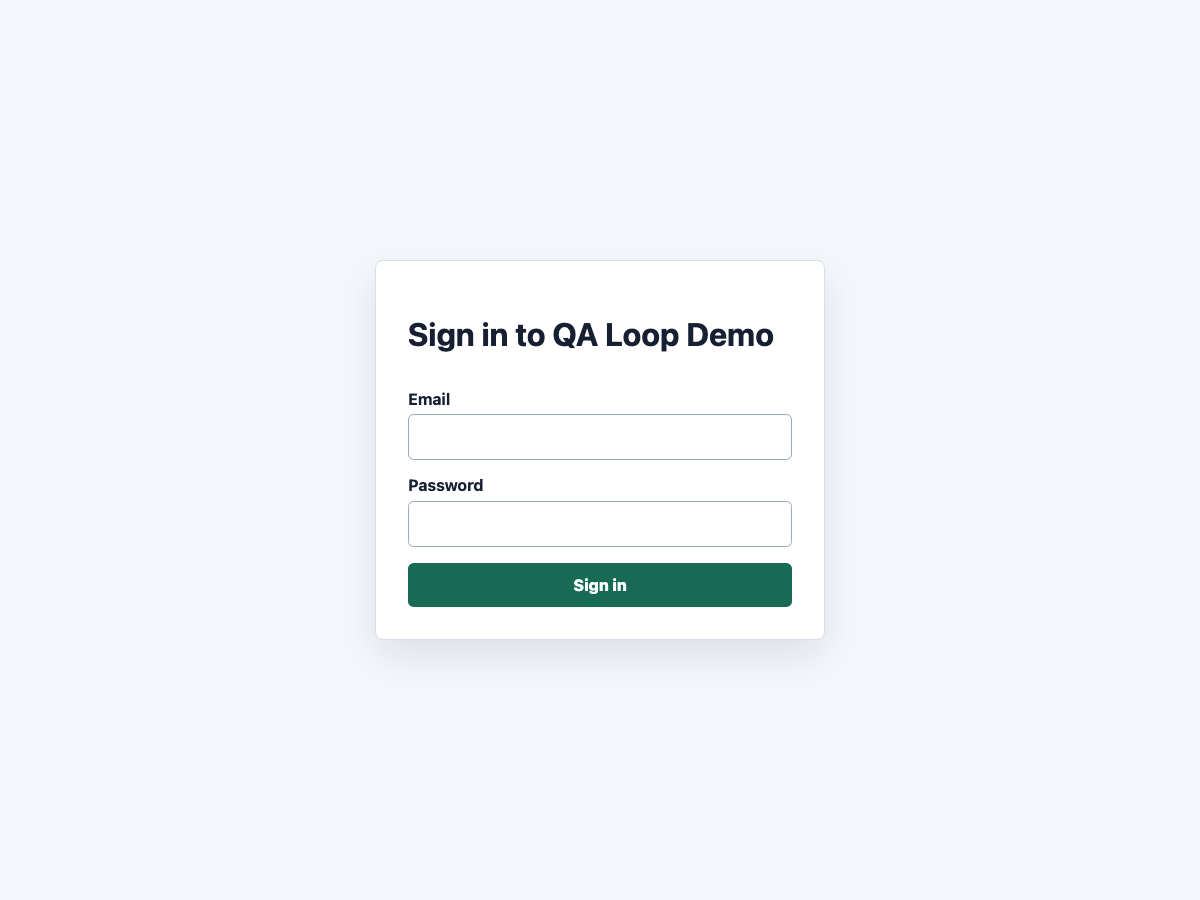
The tutorial begins red and earns green.
The included project uses a synthetic login fixture. The original test asks for an obsolete accessible name. The maker may edit only the test, while the product and oracle remain sealed.
Part three · Project
Run the QA Repair Loop
Execute a complete Playwright example, inspect both failed and accepted evidence, and adapt the pattern to test design, STLC, Selenium, and AI evaluation.
The Synthetic Login Failure
Understand the fixture, the stale accessible name, and the acceptance behavior.
3.2Seal the Baseline
Restore the intentional failure and hash every immutable tutorial file.
3.3Prove Red Before Green
Confirm the oracle passes while the target test fails for the intended reason.
3.4Diagnose and Repair Narrowly
Use the failure log to replace only the stale locator without weakening intent.
3.5Verify Repeatedly
Run policy, repeated target checks, oracle checks, hashes, and independent review.
3.6Adapt the Pattern
Translate the contract to test plans, cases, STLC stages, Selenium, and AI evals.